.svg)


The 18-Month Siege
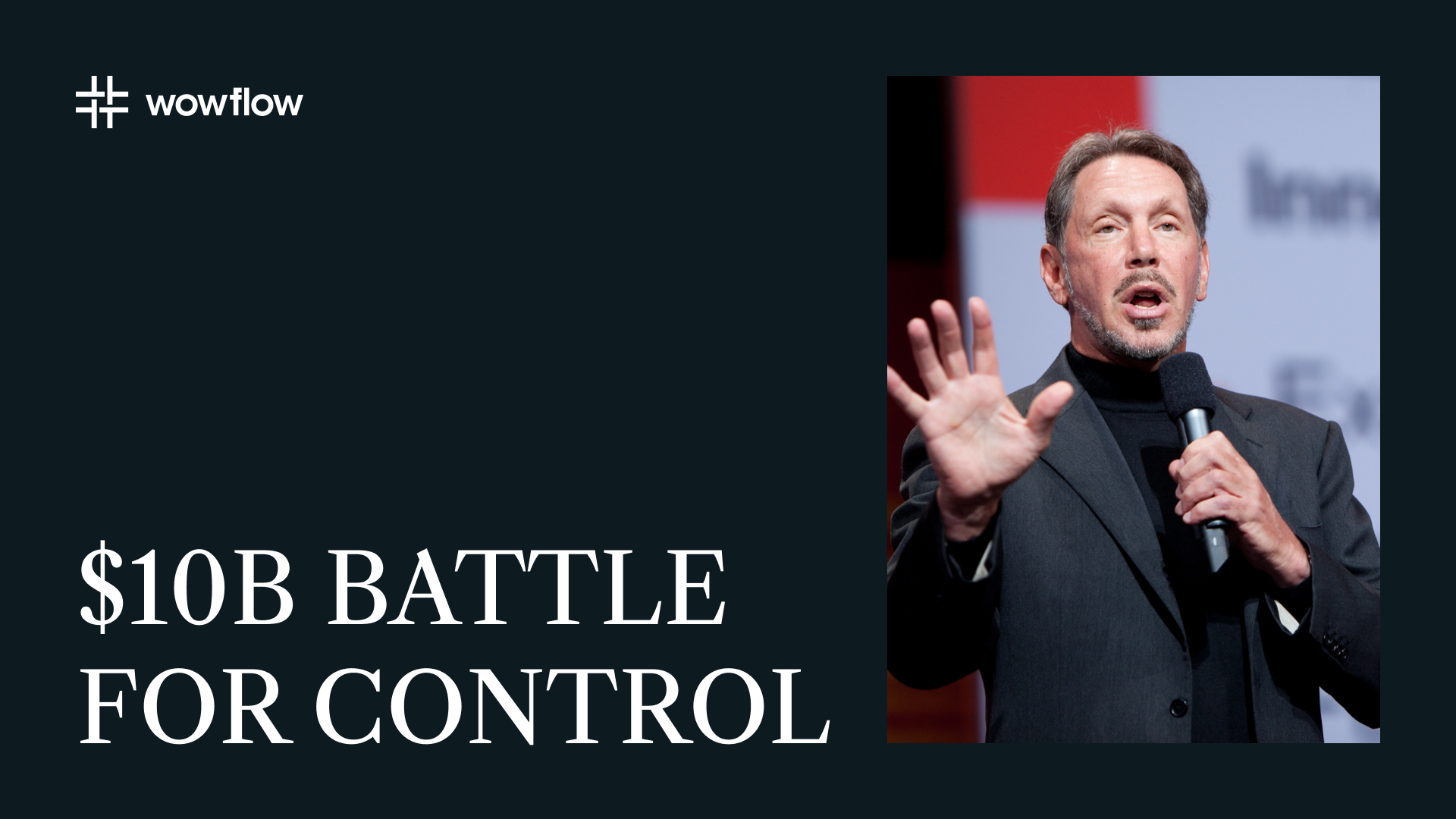
This wasn't a friendly handshake; it was a hostile takeover. PeopleSoft’s board rejected the offer immediately, calling it "grossly inadequate." Lawyers were summoned, regulators launched investigations, and customers began to panic. For most leaders, the sheer amount of bad press and legal friction would have been enough to retreat.
Ellison did the opposite. He leaned into the discomfort. He raised the bid repeatedly—starting at $7.7 billion and eventually reaching a staggering $10.3 billion by December 2004. He understood that large organizations ultimately crave stability. By maintaining a relentless, year-long pursuit, he made the merger feel like a mathematical certainty. He transformed Oracle from just another software option into a "one-stop-shop" power that was impossible to ignore.
Experience Intelligence: Why AI Would Have Retreated
An AI system today can compare feature lists, analyze stock price volatility, and optimize acquisition costs. However, it lacks the Experience Intelligence to execute a Larry Ellison move:
- AI Avoids Prolonged Conflict: A data-driven model would likely flag an 18-month hostile battle as a "high-risk, low-efficiency" move. It would have recommended pivoting to a friendlier target long before the 10-billion-dollar finish line.
- Creating "Inevitability": AI can calculate probabilities, but it cannot walk into a boardroom and project the raw confidence required to make executives feel that resistance is futile. Ellison didn't sell a product; he sold a sense of momentum.
- The Emotional Weight of Displacement: Replacing a company’s core software is like performing open-heart surgery on a business. AI doesn't understand the "nerve" required to navigate that emotional displacement. Ellison knew that enterprise sales aren't just about technical specs—they are about winning the battle of trust and reputation under extreme pressure.
Oracle didn't win because its code was 10.3 billion dollars better than PeopleSoft’s. It won because Ellison understood that in massive markets, hesitation is expensive, and relentless action changes the very perception of reality.
Calculate Your Experience Gap
Is your organization playing it safe in a fragmented market, or are you building the "nerve" to become an industry standard?
Are your leaders relying on spreadsheets that suggest retreat, or do they have the experience to see through the noise of a long-term siege?
Take 60 seconds to use our Experience Gap Calculator to see if your strategy is designed for polite competition or total market dominance.
.png)