.svg)

.png)

The Broken B2B Marketing Machine
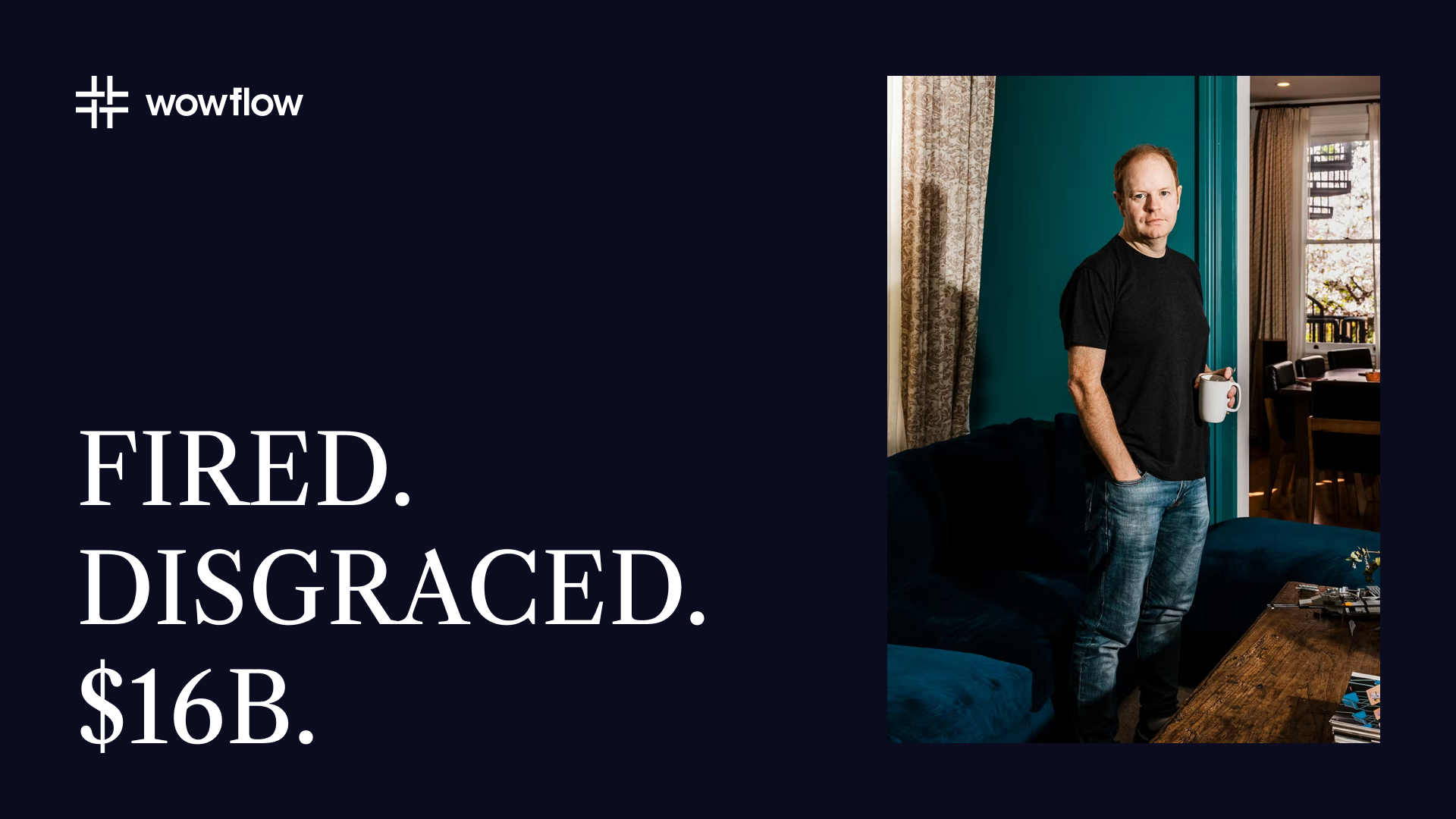
Before Chris Walker disrupted the industry, he was trapped inside it. As Head of Marketing at a medical device company, he had a front-row seat to everything wrong with traditional B2B marketing strategies.
The problems were everywhere:
His company spent $500,000 on trade show booths where prospects simply walked past without stopping. Lead generation campaigns produced what sales teams openly called "garbage leads" that nobody would follow up on. The entire MQL (Marketing Qualified Lead) system created tension between marketing and sales departments, with each blaming the other for poor results.
Walker watched this cycle repeat across the industry. Companies threw millions at the same broken playbook: expensive trade shows, aggressive cold outreach, gated content, lead scoring systems, and relentless paid advertising campaigns. The B2B marketing funnel had become an expensive machine that converted budget into friction.
But here's what made Walker different: he didn't just complain. He asked a radical question that would reshape his career: "What if we stopped all of it?"
The Zero-Dollar Experiment Begins
When Walker founded Refine Labs in 2019, his thesis was simple but untested: you could build a successful B2B marketing agency spending nothing on paid acquisition. Instead, the entire growth strategy would center on organic content, thought leadership, and building trust at scale.
The approach seemed naive to industry veterans. B2B marketing had always relied on paid channels for lead generation. Trade publications, LinkedIn ads, Google AdWords, and sponsored content were considered essential. The idea of competing without these tools wasn't just unconventional, it seemed financially impossible.
Walker's strategy was deceptively straightforward:
Post valuable insights on LinkedIn every single day. No sales pitches. No gated downloads. Just honest, actionable perspectives on what was broken in B2B marketing and how to fix it. He committed to brutal transparency, calling out sacred cows like MQL tracking and challenging the entire lead generation industrial complex.
The early response was skepticism mixed with curiosity. Some people thought he was building a personal brand rather than a real business. Others wondered how long he could maintain this approach before economic reality forced him back to traditional methods.
Then something unexpected happened.
The Catalyst: When COVID Proved Him Right
In March 2020, the global pandemic didn't just change Walker's business, it validated his entire thesis.
Overnight, every company's traditional B2B marketing playbook stopped working. Trade shows were cancelled indefinitely. In-person sales meetings became impossible. Cold outreach felt tone-deaf as businesses struggled to survive. The marketing tactics that companies had depended on for decades simply evaporated.
But Chris Walker's content-first approach? It didn't just survive the crisis, it became the only viable strategy.
Companies that had built audiences through consistent content creation were suddenly thriving while competitors scrambled to adapt. The organic community Walker had cultivated on LinkedIn became more valuable than any advertising budget could buy. His daily posts reached decision-makers who were actively searching for new marketing approaches during uncertain times.
Refine Labs' revenue trajectory told the story:
- 2019: $600,000
- 2020: $2 million (233% growth)
- 2021: $8 million (300% growth)
- 2022: $21 million (162% growth)
Total advertising spend across all four years: $0
The "impossible" strategy had become not just viable, but dominant. What started as a contrarian bet had evolved into the new industry standard for forward-thinking B2B companies.
The Death of the MQL: Rethinking B2B Marketing Metrics
Perhaps Walker's most controversial position was his war on Marketing Qualified Leads (MQLs), the metric that B2B marketing teams had relied on for years.
In 2019, if you told a CMO to stop tracking MQLs, they would question your competence. The MQL was sacred, a seemingly scientific way to measure marketing's contribution to revenue. Lead scoring systems, conversion rate optimization, and funnel analytics all depended on this framework.
Walker saw it differently. To him, the MQL represented everything wrong with modern B2B marketing: treating buyers like machines instead of humans.
His argument was simple but devastating: People don't want to be "nurtured" through automated email sequences. They don't want to fill out forms to access basic information. They don't appreciate being scored, segmented, and passed to sales representatives when they hit arbitrary thresholds.
Instead, buyers want to learn from people they trust. They want valuable insights without friction. They want to make decisions on their own timeline, not according to a marketing automation workflow.
So Walker eliminated the entire system. Refine Labs had:
- No gated content requiring email addresses
- No MQL forms or lead capture mechanisms
- No aggressive follow-up sequences
- No lead scoring or qualification criteria
Instead, the company offered everything freely: insights, frameworks, case studies, and educational content. The bet was that when prospects were ready to buy, they would already know, trust, and respect Refine Labs.
The results validated this approach completely. By 2023, dozens of major B2B companies had eliminated MQL tracking entirely, following Walker's model. Companies like Adobe, Gong, and Snowflake began adopting his framework. The conversation had shifted from "how many MQLs did we generate?" to "how much brand awareness and trust have we built?"
Building Trust at Scale: The Content Strategy That Won
Walker's success wasn't just about what he stopped doing (paid ads, gated content, MQLs). It was about what he did instead: building genuine trust through consistent, valuable content.
By 2023, the numbers told a remarkable story:
- 160,000+ LinkedIn followers who engaged regularly with his posts
- A top-ranked B2B marketing podcast reaching thousands of marketing leaders weekly
- A newsletter delivering insights to decision-makers across the industry
- Dozens of speaking engagements at major marketing conferences
But these weren't vanity metrics. Each represented a relationship built on value, not interruption. When someone from Walker's audience needed marketing services, they didn't request proposals from multiple agencies, they already knew who they wanted to work with.
This is the fundamental shift Walker pioneered: moving the sale from the sales call to the months and years before it. By the time a prospect reached out to Refine Labs, the trust was already established. The sales process became a conversation about implementation details, not convincing someone to take a chance on an unknown vendor.
Traditional B2B marketing tries to interrupt people with ads and convert them quickly. Walker's approach invested in long-term relationships, knowing that trust compounds over time. The first approach optimizes for short-term lead generation. The second optimizes for sustainable business growth.
The Experience Intelligence Lesson: What AI Can't Replicate
Today, artificial intelligence can generate unlimited content. It can write blog posts, create social media calendars, optimize SEO, and even develop entire content strategies. This has led some to question whether Walker's approach can be automated and commoditized.
But this misses the fundamental lesson of his success.
Walker's insight that traditional B2B marketing was broken came from lived experience watching dysfunction firsthand. No algorithm could have identified this problem because it required human frustration with a fundamentally flawed system.
His courage to build a company on zero ad spend when everyone called it impossible? That required conviction that only comes from deep expertise and willingness to risk failure. AI can't replicate the human capacity to bet everything on a contrarian thesis.
The authentic voice that earned 160,000 followers' trust? It emerged from genuine expertise and vulnerability about mistakes, learnings, and evolving perspectives. AI can mimic communication styles, but it can't create the credibility that comes from real experience shared honestly.
This is what we call the Experience Gap, the difference between theoretical knowledge (which AI excels at) and lived wisdom (which remains uniquely human). Walker's story isn't about tactics that can be copied. It's about seeing what's broken, having the courage to build something different, and earning trust through authentic expertise.
That's the human experience AI will never replicate.
Calculate Your Experience Gap
Chris Walker's story demonstrates the cost of the Experience Gap, when organizations lack the lived expertise to see what's broken and the courage to build something better.
How much is your experience gap costing you?
Take 60 seconds to calculate your experience gap and discover how much revenue you're leaving on the table.
.png)